
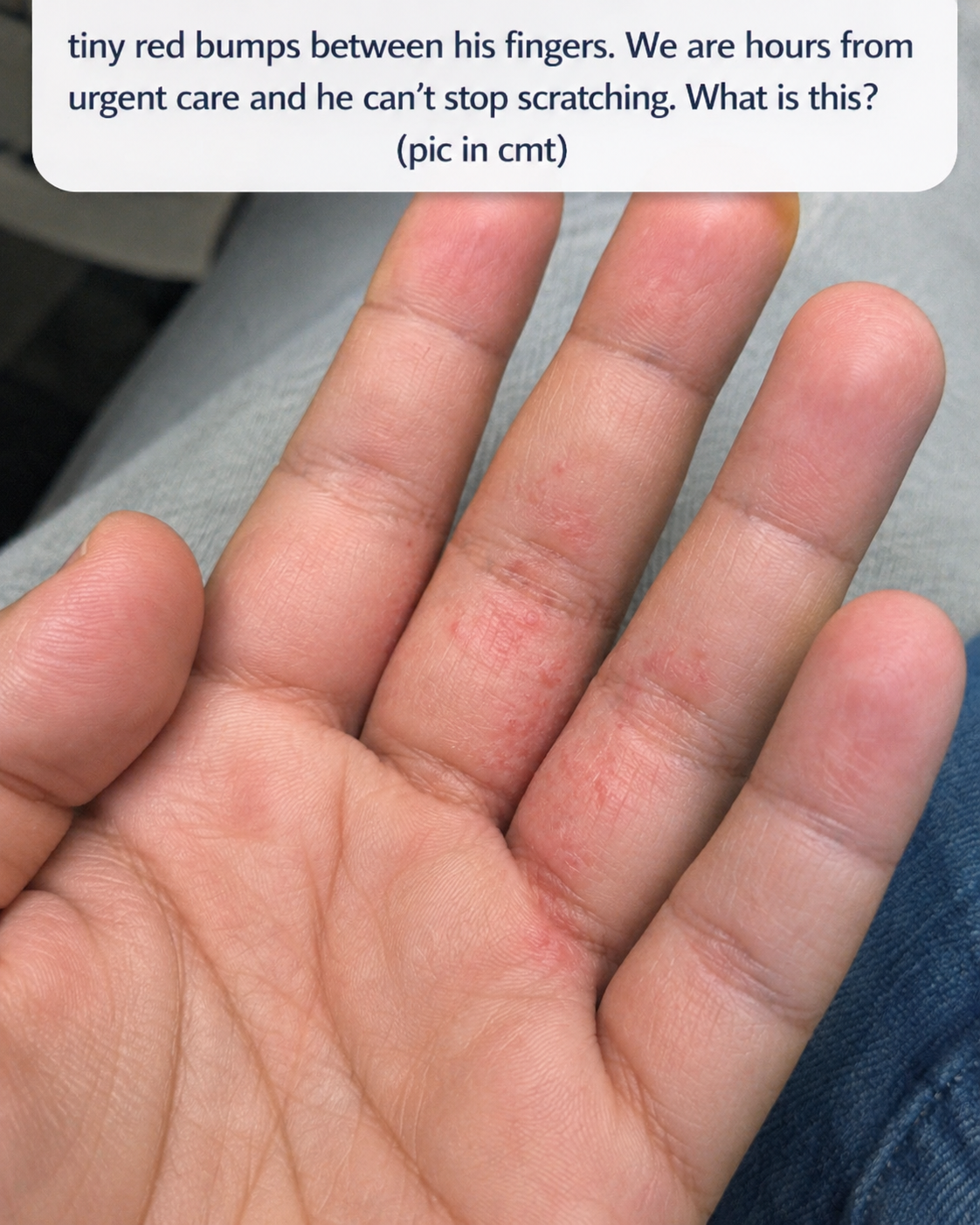
Tiny Red Bumps Between the Fingers: What Could Be Causing the Itching?
Tiny red bumps between the fingers can be surprisingly uncomfortable, especially when they become intensely itchy. A rash in this location can have several possible causes, ranging from simple skin irritation to contagious skin conditions that require medical treatment. Because different conditions can look very similar, an image alone is usually not enough to make a definite diagnosis. However, understanding the common possibilities can help you recognize when professional medical attention is appropriate.
1. Scabies Is One Possibility
One condition commonly associated with intense itching and small bumps between the fingers is scabies. Scabies is caused by microscopic mites that burrow into the upper layer of the skin. The immune system reacts to the mites and their presence, producing itching and a rash.
The spaces between the fingers are a classic location for scabies. Small red bumps, tiny blisters, or thin lines called burrows may appear. The itching is often particularly severe at night and may gradually spread to other areas of the body.
Scabies can spread through prolonged skin-to-skin contact. Because of this, if scabies is suspected, close household contacts may also need evaluation. Treatment usually requires a medication specifically prescribed or recommended for eliminating the mites.
2. Contact Dermatitis Can Cause Similar Bumps
Another common explanation is contact dermatitis. This happens when the skin becomes inflamed after exposure to something irritating or something that triggers an allergic reaction.
Common triggers include soaps, detergents, cleaning products, fragrances, cosmetics, gloves, metals, adhesives, and certain chemicals. Frequent handwashing can also damage the skin barrier and contribute to irritation.
Contact dermatitis may cause redness, itching, swelling, dryness, scaling, cracking, or small fluid-filled bumps. If a person recently started using a new soap, sanitizer, detergent, lotion, cleaning product, or pair of gloves, that exposure may provide an important clue.
The best approach is generally to identify and avoid the suspected trigger while protecting the skin with gentle, fragrance-free products.
3. Dyshidrotic Eczema May Affect the Fingers
Dyshidrotic eczema is another condition that can produce extremely itchy small bumps or blisters on the fingers, palms, and sides of the hands.
The bumps can initially appear as tiny, deep-seated blisters. They may later dry out, peel, or leave the skin cracked and irritated. Episodes can be associated with stress, sweating, heat, allergies, or exposure to certain substances.
Unlike an infectious condition, eczema itself is not contagious. Treatment depends on severity and may include moisturizers, avoidance of triggers, and medications recommended by a healthcare professional.
4. Insect Bites Are Another Possibility
Insect bites can also produce clusters of itchy red bumps. Depending on the insect, bites may occur on exposed skin and can appear in groups or scattered patterns.
Bedbugs, mosquitoes, fleas, and other insects can cause itching and redness. However, bites between the fingers are not automatically evidence of an insect infestation. The overall pattern, recent exposure, and appearance of the lesions all matter.
If multiple people in the same household suddenly develop unexplained itchy bumps, it is worth considering a shared environmental exposure and discussing it with a healthcare professional.
5. Fungal or Other Skin Infections
Some fungal infections can affect the hands and cause redness, scaling, cracking, itching, or irritation. Bacterial infections can also occur, particularly when scratching damages the skin.
A secondary infection may cause increasing warmth, swelling, tenderness, pus, crusting, or spreading redness. These signs should not be ignored.
It is important not to assume that every itchy rash is fungal. Using the wrong treatment can sometimes irritate the skin further or delay appropriate treatment.
6. Why Scratching Can Make Things Worse
When a rash becomes itchy, scratching can provide temporary relief, but repeated scratching damages the skin. Tiny breaks in the skin can allow bacteria to enter and potentially cause an infection.
Scratching can also increase inflammation and make the rash appear more severe. Keeping fingernails short and avoiding aggressive scratching can help protect the affected area.
A cool, clean compress may temporarily soothe itching. Gentle skin care and avoiding suspected irritants can also reduce additional irritation.
7. What to Do While Waiting for Medical Care
If the rash is extremely itchy but medical care is not immediately available, several simple measures may help.
First, avoid scratching as much as possible. Keep the hands clean, but avoid harsh soaps and very hot water. Use lukewarm water and a mild, fragrance-free cleanser.
A cool compress can be placed over the irritated area for several minutes at a time. A plain, fragrance-free moisturizer may help if the skin is dry or irritated.
Avoid experimenting with multiple creams, essential oils, household products, or harsh chemicals. Some products advertised as home remedies can cause additional irritation and make the rash harder to evaluate.
If scabies is a possibility, avoid prolonged skin-to-skin contact with others until a healthcare professional has assessed the situation, because scabies can spread through close contact.
8. When Medical Evaluation Is Important
A healthcare professional should evaluate an unexplained rash when the itching is severe, persistent, spreading, or interfering with sleep and normal activities.
Medical evaluation is especially important if several household members develop similar itching or bumps. This pattern can provide an important clue toward a contagious or environmental cause.
Urgent medical attention may be appropriate if the rash is accompanied by rapidly spreading redness, significant swelling, severe pain, warmth, pus, fever, red streaks, or other signs of infection.
Emergency care is necessary for symptoms such as difficulty breathing, swelling of the lips or tongue, fainting, or a rapidly developing widespread allergic reaction.
9. Diagnosis Usually Requires More Than a Photograph
A photograph can show the general appearance and location of a rash, but many skin conditions overlap visually. A clinician may ask when the rash began, whether the itching is worse at night, whether anyone else has similar symptoms, and whether there have been recent changes in soaps, detergents, medications, foods, workplaces, pets, or living environments.
The clinician may examine the skin closely and, depending on the suspected cause, perform additional testing.
This is particularly important when conditions such as scabies, eczema, contact dermatitis, fungal infection, and insect bites are being considered because their treatments can be very different.
10. Prevention and Skin Protection
Maintaining a healthy skin barrier can reduce irritation. Use gentle cleansers, moisturize regularly, and wear appropriate protective gloves when handling irritating household products.
However, gloves can sometimes cause sweating or reactions themselves, so choosing suitable materials and taking breaks can be helpful.
Avoid sharing personal items such as towels when a contagious skin condition is suspected. Wash clothing, bedding, and towels according to appropriate laundering instructions if a healthcare professional confirms a contagious infestation or infection.
Most importantly, do not rely on a social-media photograph for a definite diagnosis. Tiny red bumps between the fingers can have many causes, and the correct treatment depends on identifying the underlying problem.
An intensely itchy rash between the fingers deserves attention, particularly when symptoms appear suddenly or continue getting worse. Scabies is one possibility, but eczema, contact dermatitis, insect bites, and infections can produce similar appearances. Until the cause is established, gentle skin care, avoiding potential irritants, limiting scratching, and seeking appropriate medical evaluation are sensible steps. A clinician can examine the rash in context and recommend the treatment most appropriate for the actual cause.